• Studio
  • Perspective
  • About
  • Contact
  • Sign In My Account
Menu

electricfoxy

Creating authentic beauty by blending technology and artisanship
  • Studio
  • Perspective
  • About
  • Contact
  • Sign In My Account

The Internet of YOU

March 27, 2014

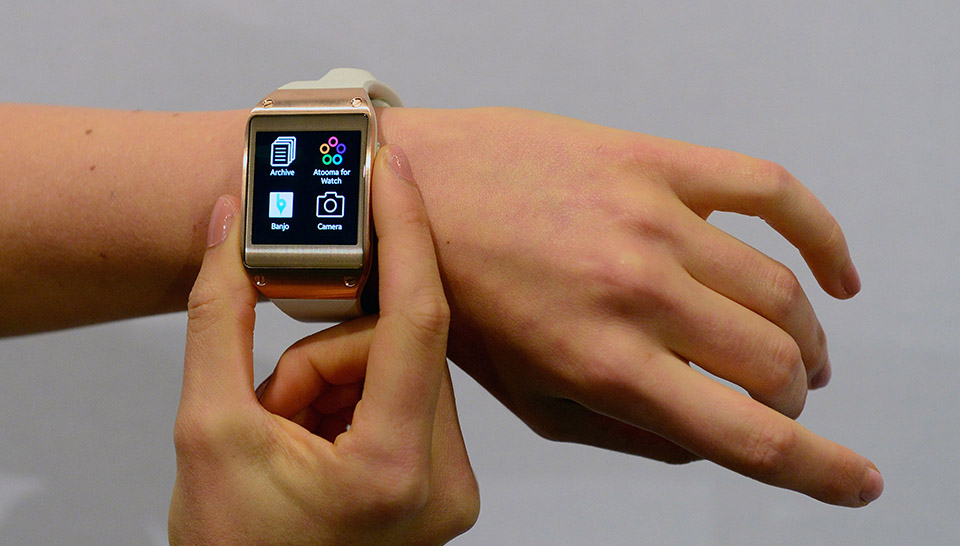
Wearable technology is on a collision course with the Internet of everything. When the two collide, we will enter into a new era of the Internet of you. The recent Apple Healthbook and Google’s Android Wear, combined with Motorola’s Moto 360 news are taking the wearable space to the next level. Apple Healthbook demonstrates the powerful insights about ourselves that wearables could deliver. Once the data is pulled into the platform, it can find correlations and trends and not only display its meaning in the historical sense, but make predictions that can give us even greater, more proactive insights about ourselves and how to improve our lives. It also confirms something we have known for a while: that the real winners will be the platform players that can leverage their channels and deliver services beyond just fitness.

At the same time, the promise of Android Wear is that it creates opportunities for new apps and services that will help create value for consumers at an accelerated speed. If you compare wearables to the evolution of the smartphone, we started with the brick phone, which was all about proving out the technology with little consideration of aesthetics and user experience. Fast forward to the iPhone, which became mainstream when the app store enabled new services and experiences on top of the phone device—from useless ones like Flappy Bird to indispensable ones like Maps. The same is happening with Android Wear. It’s turning wearables into a platform for delivery of a wide range of new services. In fact, it has the potential to change the way we interact with our technology altogether.

You can think of this new platform as an ecosystem of devices — wearables, mobile, etc. — that are stitched together with software and services delivered through apps. And with wearables, what we are really talking about here are new sensor-based devices that can not only allow us to collect environmental and mobile data, such as location and temperature, as we do today, but also a new form of biometric data, such as heart rate or steps, that we can combine to make completely new experiences that are more personal to us. What this means is that we are no longer talking about the Internet of everything, but rather, the Internet of you, where we can build our technology so that it works for us, not the other way around. It marks a pivotal moment in our technological history, which brings us to an entirely new era of technology. You will no longer have to stop, think, and decide to take your phone out of your pocket, find and launch the app you want, then take action. Instead, our data and services will come to us when we need them and in the context in which we are currently in.

Beyond health and fitness

Since a platform like Android Wear is built on Google, it comes with all of the other services and data that Google provides, which will allow developers to combine these services toward entirely new experiences potentially beyond health and fitness.

For example, one of Google’s big advantages is its recent purchase of Nest, which offers smart devices for the home. You can imagine an Android Wear-powered device that becomes connected to the home in a very seamless, data-driven way. Your wearable device would know that you have had a very stressful day and that you are heading home. Your connected house knows that you’re on your way home and can turn down the lights and play calming music to adjust the environment automatically based on your mood, before you even walk in the door.

Accelerating innovation

Android Wear provides a platform for third-party developers to explore this new channel and come up with their own wearable experience. This opens up the opportunity for many types of businesses to be invented and built on top of it quickly, accelerating innovation and exponentially increasing the value that wearables can bring. For those who focus on hardware, the platform allows for new devices to be built on top of the platform that allow for new form-factors to collect valuable information about ourselves. And for those who don’t have the appetite to build new hardware, the platform provides a way to build new apps and services from the data that these new devices collect. What this means, is that a platform like this can result in an explosion of new wearable experiences that will have greater impact since they will have the potential to become mainstream. And if done right, these new experiences will make our technology much more personal.

Who will pave the way toward the Internet of you?

Most of the major technology companies are dipping their toes in this space in a race to be the big winners. In addition to Apple Healthbook and Android Wear announcements, Intel also just announced that they purchased smartwatch maker Basis. Yet Google is empowering developers to build apps and services on top of their platform, which will accelerate innovation. Interestingly, Google is doing this before Apple does. Will this help Google win the ultimate wearable battle? We will have to wait and see. As exciting as it is to think about these new experiences and interactions, we also have to be really honest about how they can add value to our day to day lives. Whoever figures out that problem first and creates the “killer app” that will truly add value to our lives, will be the real winner.


This article also appears on Venterbeat.


In Trends
Comment

Join me at Connected Bodies Symposium

February 19, 2014

Art Center College of Design in partnership with Intel is hosting a Symposium today titled, Connected Bodies: Imagining New Wearables. I will be speaking on a panel that will be focusing on the topic of "reflections on today’s wearable landscape", which will include myself, Eric Olson (Karten Design), Steve Holmes (VP Smart Device Innovation, New Devices Group, Intel), Lama Nachman (User Experience Research, Intel Labs), and moderator Syuzi Pakhchyan, Art Center's Intel Technologist-in-Residence. It should be a great discussion as this space continues to heat up. For more info on the event, go here.

In Events Tags Art Center, Art Center College of Design, Connected Bodies Symposium, wearable technology
Comment

Why companies need to make wearables cool

February 18, 2014

My colleague at Artefact, Craig Hajduk, recently wrote an article about the business of wearables. As this new industry continues to pave its way, there are a significant amount of challenges not only with the technical, design, manufacturing, and experience side of a wearable product, but also the business side. "Both consumer electronics and apparel are notoriously difficult businesses competing in mature industries. Wearable technology — everything from activity trackers like Fitbits and Misfits to watches like the Pebble to jewelry like the MEMI bracelet — blends two notoriously difficult, mature industries together: consumer electronics and apparel. Success is not guaranteed.

Design is often touted as the secret to success here, but what’s often overlooked is the business models that will ensure wearables will take off. Because the fact remains that like many cool new ideas, some wearables may just be technology in search of a problem to solve. And even when they do solve a problem for users, the unanswered question still is how to create new and sustainable businesses around them.

That’s where design thinking — with its ability to tackle complex problems from the perspective of deep user empathy — is the right approach to designing a business model strategy for wearable tech. In fact, the business model for wearables can be a key part of the product experience itself: The very tools that help create the product can be used to identify which models will support and enhance the customer experience.

Digital music services is a great example where the business model was a critical piece of the iPod product experience design and its success: Apple understood that a feeling of ownership was critical for digital music, and focused its attention on making purchasing and owning digital music as easy and intuitive as possible. Many pundits predicted streaming or rental models would overtake iTunes, since they were more affordable or provided access to more music. Yet, without a sense of ownership, the long-term value of those streaming and rental alternatives was harder for users to “get.” The results of those design-driven choices — and of course other factors — are clear: Apple iTunes business generated $4B in revenue this past quarter, while streaming and rental services continue to struggle.

As with digital music, wearables companies need to understand consumer expectations from these technologies. We can’t just create aesthetically pleasing products that generate interesting quantified self (QS) data — we need to create compelling experiences that connect emotionally with customers, to help them realize their goals and aspirations."

Continue reading on Wired

Image from The NY Post

In Business Tags wearable technology
1 Comment

Join me at CES Vegas today

January 8, 2014

I'll be speaking on a wearable tech panel today at CES in Vegas. Come and join me if you're attending. Some information on the talk: Wearable Technology Panel When: January 8, 2014, 4:25-5 p.m. Where: LVCC, North Hall N256

Less than a week into the New Year, many tech experts are proclaiming 2014 the year of wearables. Award winning designer and wearable tech thought leader Jennifer Darmour is joining a panel of wearable tech experts to discuss the future of this hot industry and introduce the highlights from the Kids@Play and Mommy Tech’s FashionWare show.

Get a sneak peek at the highlights from our FashionWare show and hear from the arbiters of fashion-meets-function in wearable, embedded and new technologies. From glitz and glitter, to new fabrics and new ways to get the perfect fit, the fashionable woman is entering the tech world fast.

Moderator: Robin Raskin, Founder, Living in Digital Times, LLC

Panelist: Jennifer Darmour, User Experience Design, Artefact Marta Hall, President, Velodyne Chris Herbert, CEO, Phone Halo Judy Tomlinson, Founder, AvocSoft and CEO, FashionTEQ Jillian White, Marketing and Product Management, MC10

In Events
1 Comment

An unobtrusive language translator

December 10, 2013

The internet and smartphones have made it much easier to converse with people who speak different languages to you, with services using these technologies providing both instant text-to-speech and speech-to-speech translation options. Sigmo, a simple Bluetooth device which uses existing online translation services to translate from one language to the other and back again in real-time, is designed to be the middleman in the equation, thus removing the need to constantly shove your smartphone in people's faces.

The Sigmo prototype is a small square box that features a microphone, speaker, an on/off button, and first and second language buttons. Rather than performing any translating wizardry of its own, Sigmo pairs with a smartphone (iOS and Android devices will supported out of the box, with plans for more to be added later) via Bluetooth and relies on existing online translation services such as Google Translate to do the bulk of the work.

sigmo_03.jpg
sigmo_02.jpg

It cannot be claimed that Sigmo is quite up to the standard of the Universal Translator from Star Trek, but it's a step in that direction. Through the use of an accompanying app provided to buyers for free, users would be able to translate between 25 supported languages. These include English, French, Spanish, German, and Japanese, but the Sigmo team says this number will automatically increase as online translation services roll out updates.

Continue reading on Gizmag. Images from Gizmag.

In Augmenting Tags Sigmo, universal translator, wearable technology
Comment

Textiles transform with body movement

December 8, 2013

Textile and fashion designer, Langdi Lin, created this evocative collection for the MA Textile Futures 2012 in Central Saint Martins. The project questions how textiles can bring a new perspective on transformation engaged with the body movement. Lin uses carefully constructed geometric patterns that fold, bend, expand and move with the body. As you move, they transform into a different texture, shape and silhouette. I love how these explorations transform and mimic natural body movements in an analog way.

bloomingbody_04.png
bloomingbody_05.jpg

More info at Langdi Lin's site. Images from Trendease and Textile Futures.

In Fashion Tags Langdi Lin, MA textile futures, The Blooming Body
Comment
← Newer Posts Older Posts →

Recent posts

Perspective
Knyttan disrupts garment production with 3D printer-styled knitting machines
about 11 years ago
Artisanally-crafted footwear inspired by 3D printing
about 11 years ago
A beautifully crafted collection for rehabilitation
about 11 years ago
Apple Watch Used To Share Newborn Baby's Heartbeat
about 11 years ago
En Vogue: Blurring the lines between brand and tech
about 11 years ago
Here's what The Verge expects from CES 2015
about 11 years ago
Creating beautiful visualization from ballet
about 11 years ago
Misfit explores new business models for wearables
about 11 years ago
Apple Watch Makes A fashion Debut on the Cover of Vogue China
about 11 years ago
Fitbit Designers Imagine A Digital Tattoo Implanted Under Your Skin
about 11 years ago

Latest tweets


About this blog

The electricfoxy blog consists of the latest trends, materials, designers, products and events going on around the community of artisans and makers of modern products that are inspired  by technology.

___

STUDIO      ABOUT      PRESS     INTERVIEWS & EVENTS     CONTACT

Electricfoxy. 2015. All rights reserved.